
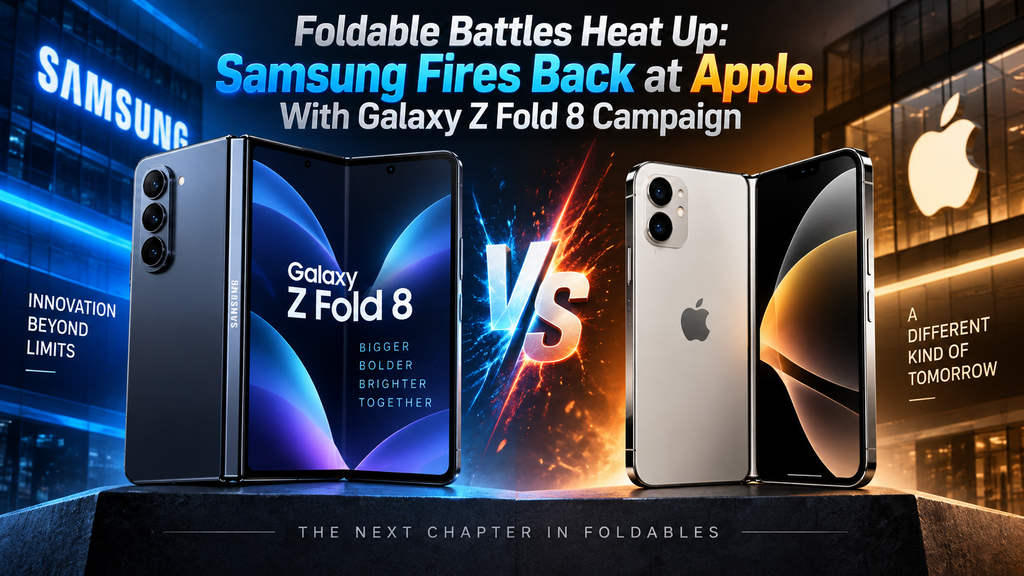
The competition for the high-end smartphone market in the United States has reached a critical turning point as Samsung unleashes an aggressive marketing offensive for the Galaxy Z Fold 8, aiming straight at Apple. For years, Samsung treated the foldable category as its uncontested proving ground, iteratively refining hinges, display materials, and software multitasking while Cupertino stayed on the sidelines. That dynamic has dissolved. With Apple stepping into the book-style foldable arena, Samsung’s latest campaign pivots from product introduction to defensive warfare, targeting American consumers with a message of hard-earned hardware maturity.
The Strategy Behind the Push
Samsung’s promotional drive blends direct commercial jabs with a heavy retail and digital blitz across major US metropolitan markets. Rather than focusing merely on novel form factors—a tactic common in the category’s infancy—the Z Fold 8 marketing leans on eight generations of engineering trial and error. Taglines across social platforms, digital out-of-home billboards, and carrier storefronts subtly emphasize that while competitors may be making their first foldable, Samsung has already solved the hinge creaks, creasing, and durability hurdles that plagued early adopter hardware.
Key focal points of the US campaign include:
- Hardware Maturity: Highlighting the Fold 8’s ultra-thin profile, reduced hinge gap, and refined display crease against first-generation engineering compromises.
- Ecosystem and Multitasking: Emphasizing One UI features like Multi-Active Window, taskbar pinning, and S Pen support—capabilities developed and polished over years of large-screen software development.
- Aggressive Carrier Incentives: Partnering directly with US carriers to offer enhanced trade-in credits, targeting existing iPhone owners who have been waiting on the fence for foldable tech to mature.
Market Stakes in the US
The United States has historically been Apple’s strongest fortress, where iOS dominance and consumer ecosystem lock-in have kept Android flagships in check. Foldables represented Samsung’s primary wedge to pry away premium spenders willing to trade the $1,200-plus tier for genuine form-factor novelty.
| Metric / Dimension | Samsung Galaxy Z Fold 8 | Apple Foldable Competitor |
|---|---|---|
| Generation Status | 8th generation refinement | 1st generation debut |
| Software Platform | Android 17 / One UI 9.0 (mature split-screen) | Adapted iOS / iPadOS hybrid UI |
| Form-Factor Legacy | Field-tested IP ratings and flex hinge durability | Newly deployed bespoke hinge and crease solution |
| Price Tier (US) | ~$1,899 (paired with high trade-in subsidies) | ~$1,999+ premium positioning |
Why This Clash Matters
Apple’s arrival validates the foldable form factor once and for all, ending any remaining narrative that dual-screen devices are a passing gimmick. However, validation brings immediate risk for Samsung. If Apple’s first foldable captures the cultural zeitgeist the way earlier category entries have, Samsung risks being relegated to the component supplier background despite pioneering the space.
By launching a sharply timed campaign, Samsung is working to ensure that when American shoppers decide to spend nearly $2,000 on a foldable phone, they see the Galaxy Z Fold 8 as the safe, battle-tested standard rather than a placeholder.